
Hilton Head Island Directory Collections
No confirmed source identifies a conventional printed Hilton Head Island city-directory run with a title, publisher, and continuous span. That matters. Hilton Head Island is a Town in Beaufort County, and it was incorporated in 1983. Earlier local references can be filed under Beaufort County, an historic community, a plantation or development name, or a regional collection. A city-directory search should therefore begin with an item-level question, not an assumption that a complete municipal book exists.
The confirmed alternatives are still substantial. The Beaufort District Collection, Heritage Library, and South Carolina Department of Archives and History each hold a different part of the historical trail. They are research destinations, not interchangeable resident lists. The table distinguishes a dated collection from a published directory so a reader can choose an honest next step.
| Collection | Years | Where Held | Access |
|---|---|---|---|
| No verified Hilton Head Island printed city-directory run | Not established | Ask BDC and Heritage Library item by item | Call ahead or arrange research access |
| Island Packet microfilm | 1970 to March 2015 | Beaufort District Collection | In-person, dated newspaper research |
| Harman Collection microfilm and indexes | 1960 to 1990 | Beaufort District Collection | Request the relevant reel or index |
| Beaufort conveyance microfilm | 1863 to 1926 | South Carolina Department of Archives and History | Archives research, 59 reels listed |
| Beaufort plat microfilm | 1868 to 1920 | South Carolina Department of Archives and History | Archives research, three reels listed |
These sources can place a name, a lot, or an event in time. None proves an uninterrupted household history. A missing item can reflect a gap in publication, indexing, survival, or catalog description.
Hilton Head Island Directories
A catalog result, a tax account, or an online name result is not automatically a city directory. The research found no openly searchable catalog entry that verifies a Hilton Head Island printed directory series with exact holdings. The careful statement is not that no such volume can exist. It is that the available research did not confirm one. That distinction protects family research from becoming a false claim of complete coverage.
Use the Town's 1983 incorporation as a filing clue, not a dividing line for every person or address. For older work, a source may use Beaufort County or a community and development label. The Town conditions and trends assessment provides context for the Island's development chronology, while county and archival records provide the dated documentary route. Modern postal language should not be pushed backward onto an older item.
Hilton Head Island Archive Desks
The Beaufort District Collection is the first local stop for a precise directory, telephone-book, yearbook, map, or surname inquiry. It is at 311 Scott Street in Beaufort, with 843-255-6468 listed for contact. The library lists weekday public hours and recommends an appointment, so confirm access before traveling. Bring a date range, historical community name, street or parcel clue, and spelling variants. Ask staff whether an item is held, rather than asking whether a person is in a directory.
The Beaufort District Collection's research setting is shown on its official location page.
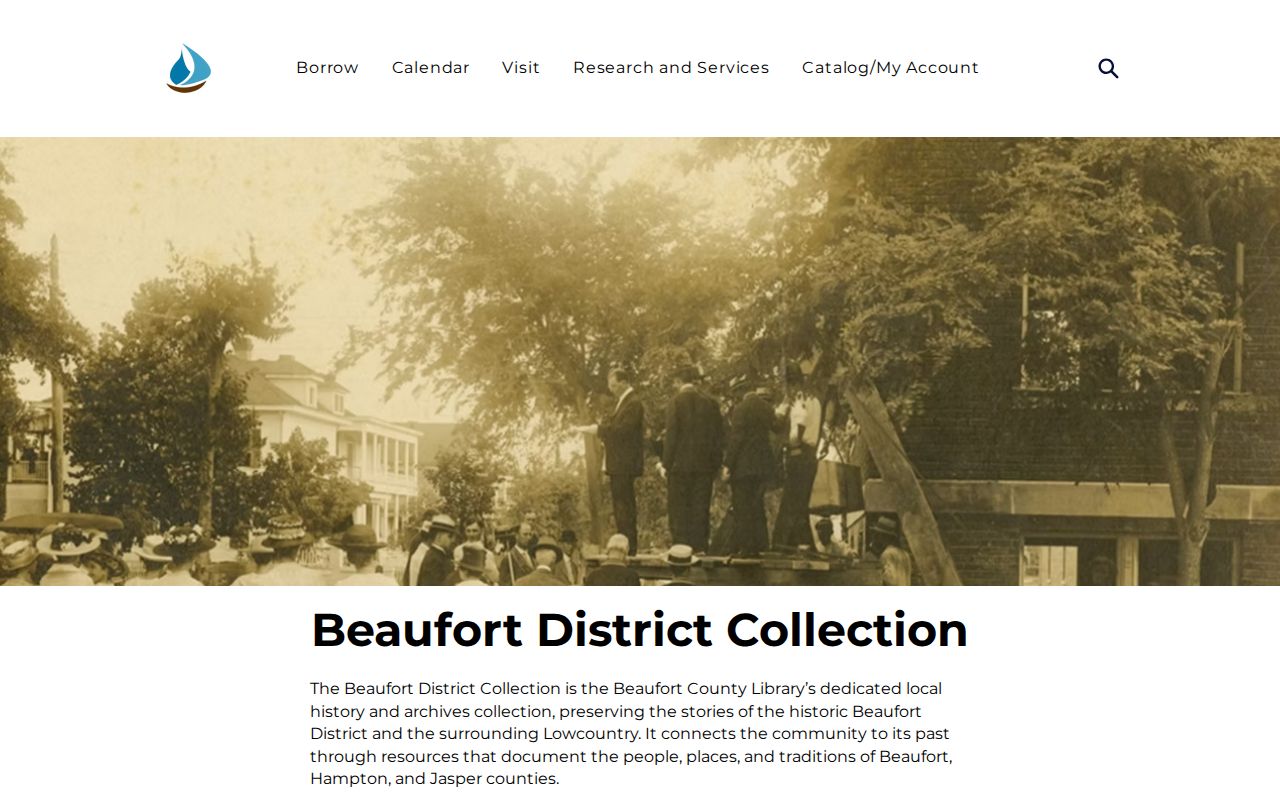
Its maps, genealogy materials, microfilm, and archival collections make it a useful place to verify whether a cited item actually exists and what it covers.
Heritage Library provides the Island-based companion route at 2 Corpus Christi, Suite 100, Hilton Head Island, SC 29928, with 843-686-6560 listed for contact. Its local-history and genealogy resources include books, maps, magazines, articles, and onsite research platforms. Ask specifically for dated directories, telephone books, school annuals, and neighborhood material. Confirm current schedule and any membership or daily-fee terms before a special trip.
Heritage Library's research resources are an appropriate starting point for an item-level city-directory question.
Library staff can help separate a catalog lead from a volume, reel, annual, or collection that a researcher can inspect under the institution's access rules.
Hilton Head Island Microfilm Leads
BDC's selected Hilton Head materials list identifies Island Packet microfilm from 1970 through March 2015. A dated issue can provide a lead connected to an address, subdivision, organization, local event, development approval, obituary, or community notice. Record the publication title, issue date, page, reel, search term, and item type. A clipping is context, not a household roster or proof of present residence.
The same source describes Harman Collection material with microfilm indexes and reels for 1960 through 1990. It can bridge development-era chronology, local reporting, and organizational history. Request the relevant reel or index from staff instead of presuming a complete text search. Vertical files may also hold newsletters, planning references, clippings, or ephemera. Their availability and any redactions need an in-person check.
Reading a Hilton Head Island City Directory
No local printed entry was publicly inspectable during the research, so no sample name, address, or notation is reconstructed here. If BDC or Heritage Library confirms a dated volume, first photograph or transcribe its title page, publisher, year, and coverage statement with staff permission. Then note only the fields that are visibly printed. An entry may offer a surname, given name, street address, telephone exchange, or occupation or business heading, but only if the particular historical source contains that field.
| Title and publisher | Identify the exact volume before relying on any entry. |
|---|---|
| Publication year | Labels the point in time; it is not a continuous residence claim. |
| Coverage statement | Shows the locality and scope the publisher says the volume covers. |
| Visible entry fields | Record a name, address, telephone exchange, or heading only where printed. |
| Source limitation | Note missing pages, unclear scope, or any reason the entry cannot establish occupancy. |
- Criss-cross directory
- A directory arranged by street or address rather than only by name. No verified Hilton Head Island criss-cross run was identified, so treat it as an item-level question.
- Householder index
- A name-oriented index that may identify the person listed for a household. Its presence and meaning depend on the individual volume.
- Abbreviation key
- The legend explaining a publisher's shortened labels. Capture it before interpreting any notation in that volume.
Hilton Head Island Directory Timeline
The record route changes with the period. The timeline below marks confirmed layers, not a sequence of printed city directories. It helps prevent a reader from treating a land record, map, newspaper, or Town file as something it is not.
- Before 1865: County and SCDAH holdings, land context, probate, and historic maps have uneven survival.
- 1865 to 1900: SCDAH material, conveyances, plats, and historical marriage records can support family and community research.
- 1900 to 1950: Released historical federal census schedules, deeds, plats, and death-index locators supply dated checks.
- 1960 to 1990: Harman Collection microfilm and indexes provide a local-history bridge.
- 1970 to March 2015: BDC's Island Packet microfilm offers a dated newspaper path.
- 1983 onward: Town planning and meeting materials supplement, but do not replace, county and archival records.
Released census evidence speaks only to its enumeration date. A newspaper mention and a recorded instrument also answer different questions. Preserve the source date and category beside every note.
Beaufort Record Survival
The SCDAH Beaufort County guide records major losses after county materials were removed to Columbia in February 1865. A missing early item can therefore reflect survival loss rather than proof that a family, parcel, or transaction was absent. The next step is to name the custodian and period searched, then try the related series instead of claiming an unbroken history.
SCDAH lists 59 reels of Beaufort conveyance microfilm for 1863 to 1926 and three reels of plats for 1868 to 1920. Those are land and geographic records, not city directories. They can clarify a lot, subdivision, or transaction chronology when a city-directory inquiry reaches a gap. The department's African American genealogy materials can also provide regional historical context without becoming a current people list.
Hilton Head Island Archive Questions
Ask a narrow question: “Do you hold a Hilton Head or Beaufort telephone book for this year?” works better than a broad request for everyone who lived on a street. Include a date range, old community label, parcel or book-and-page clue, and variant spellings. Ask for a catalog or finding-aid record before requesting a box, reel, or volume. If the answer is no, record the institution, collection checked, date range, and item type. A negative result has a useful scope.
For a newspaper or microfilm result, retain the issue date, page, reel, and whether the item was an article, notice, advertisement, letter, or obituary. For maps and plats, retain the scale, lot labels, and source date. The library research page distinguishes onsite research resources from access that may be available elsewhere. That access difference should remain in a research log.
Note: A directory-style result is strongest when its volume, date, scope, and the field actually observed are all documented.
Tracing Hilton Head Island City Directories
When a confirmed city directory, telephone book, annual, or comparable item is found, use it as one dated layer in a family-history trail. Begin with the publication date and its stated coverage. Pair it with a released historical census year, a deed or plat where land matters, and a dated newspaper or probate source when available. The goal is not to force every source into a single story. It is to see whether independently dated records agree about a place and period.
- Set a year range and list the historic community, county, and Town labels that may apply.
- Ask BDC and Heritage Library for a dated directory, telephone book, annual, or related index.
- Inspect the title page and coverage statement before copying any entry field.
- Pair the item with a released historical federal census schedule or another date-compatible source.
- Use a deed, plat, probate file, or newspaper only for the limited fact that record supports.
- Keep a “not found” result separate from a conclusion that no household existed.
A person disappearing from one item could mean a move, death, changed listing practice, incomplete coverage, or an uninspected volume. Do not choose among those explanations without another dated record. The same restraint applies to an address that appears under a different county, community, or development name.
Hilton Head Island City Directory Limits
Historic directories and their substitutes are useful for family history, local history, estate research, and understanding how a place was described at a known time. They are not a way to identify current occupants. A recorded party, property mailing address, permit contact, map label, or historic newspaper reference does not prove present residence. Keep the question tied to the historical period shown by the source.
The Town Clerk's planning and meeting archive is a post-incorporation supplement with agendas, minutes, and video. It may explain public planning context, but it is not a city directory. Use the proper office for the record type, respect library and archive restrictions, and avoid using historical material to contact, track, or harass anyone.